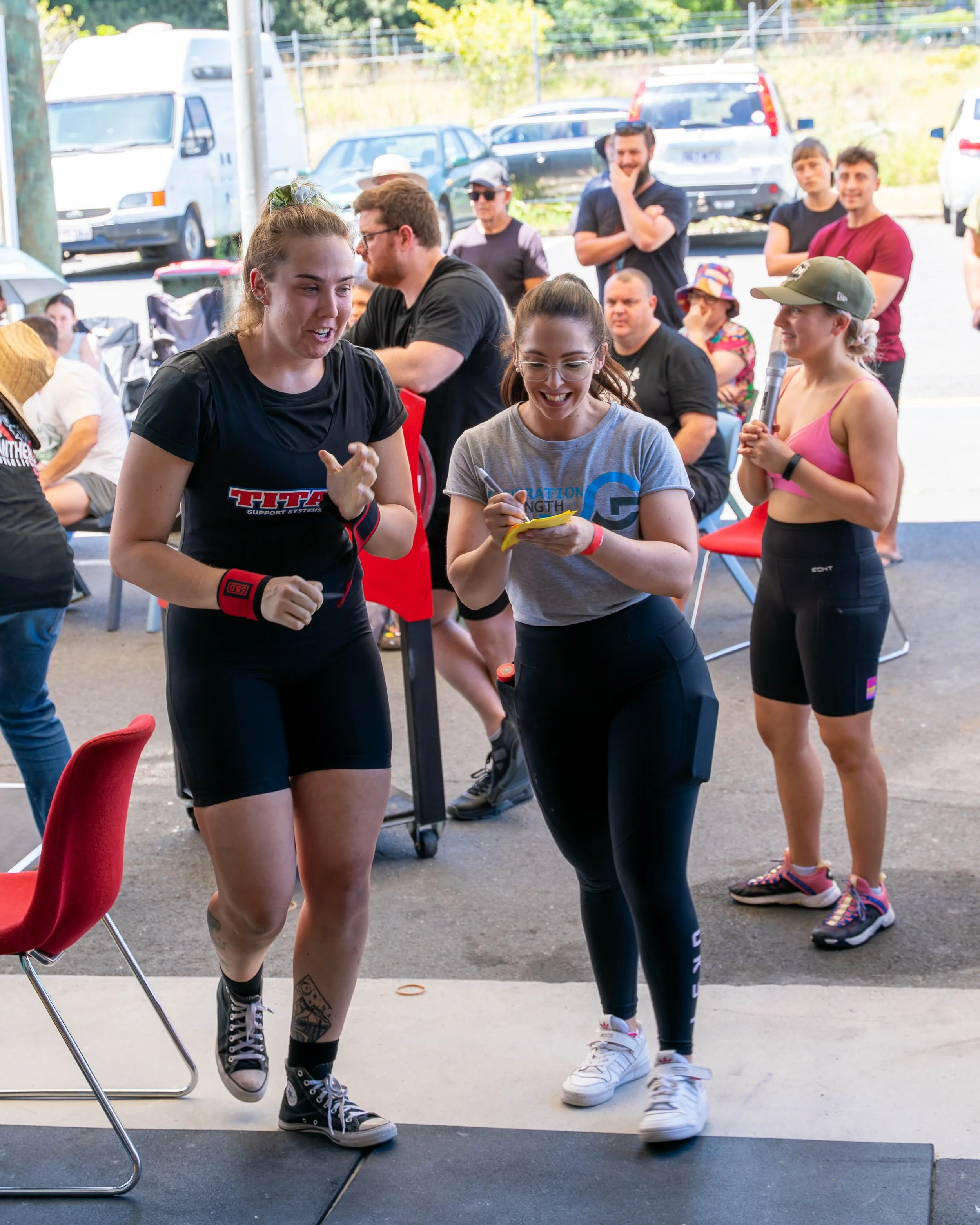
Strength Coach Q&A
-
Strength and power training is essential to ensure athletes are physical prepared for the demands of their sport and offers a multitude of benefits that directly enhance performance on the field.
The development of muscular strength is crucial for athletes participating in sports like soccer, football, rugby, and lacrosse. Increased strength contributes to improved stability, reducing the risk of injuries and providing a solid foundation for executing explosive movements. Stronger muscles also enable athletes to exert more force against opponents, enhancing their ability to win battles for possession and control on the field.
Power, defined as the ability to generate force quickly, is a key determinant in activities such as sprinting, jumping, and rapid changes of direction—common elements in many field sports. Power training involves the development of fast-twitch muscle fibers, enhancing an athlete's capacity for explosive movements. This translates to faster acceleration, higher jumps, and more agile maneuvers during gameplay.
Field athletes who integrate power training into their regimen often experience heightened on-field performance, enabling them to outmaneuver opponents and make decisive plays that can be game-changing. Strength and power training can also contribute to improved neuromuscular coordination and proprioception, enabling athletes to execute these movements with precision and efficiency.
Integrating strength and power training is essential for field athletes seeking to optimize their physical capabilities, reduce injury risks, and elevate their overall performance on the playing field.
-
If you are a powerlifter it’s easy to get caught up in thinking you need to lift maximally and that you need to focus on competition specific lifts all year. However, the truth is that hypertrophy training could be the missing piece in your training regimen. While powerlifting is primarily about lifting maximal weights, incorporating hypertrophy training into your routine can provide a a large number of benefits that directly translate into improved powerlifting performance. These benefits are explored below:
Increased Muscle Mass
Hypertrophy training, focused on building muscle size, can contribute to increased muscle mass in key muscle groups such as the chest, back, and legs. More muscle mass means the potential for greater force production during your squat, bench and deadlift, leading to improved strength and performance.
Injury Prevention
By incorporating hypertrophy training, powerlifters can strengthen muscles, tendons, and ligaments, reducing the risk of injuries associated with heavy lifting. Additionally, stronger muscles can provide better support and stability for the joints during heavy lifts, thereby decreasing the likelihood of strains and overuse injuries.
Improved Work Capacity
Hypertrophy training often involves higher rep ranges and shorter rest periods, which can enhance muscular endurance and work capacity. This increased work capacity can benefit powerlifters during training sessions and competitions, allowing for higher training volumes and improved recovery between sets.
Enhanced Recovery
The additional blood flow and nutrient delivery associated with hypertrophy training can aid in recovery, potentially reducing soreness and accelerating the repair of muscle tissue. This means you can bounce back quicker from intense powerlifting sessions and hit the gym at full strength sooner.So if you are looking to add some hypertrophy training to your week remember this involves lifting moderate loads, think around
60-75% of your 1RM, in rep ranges of 6-12 repetitions for 3-5 sets with rest periods between sets of 30 seconds to 1.5 minutes. -
RPE = Rate of Perceived Exertion. It’s a self‑assessment scale (usually 1–10) that tells you how hard a set felt, based on effort, speed, control.
-
RIR = Reps In Reserve
It tells you how many reps you had left in the tank at the end of a set.
Instead of rating how hard something felt (RPE), you’re estimating how many more reps you could have done with good form.
-
🏋️ Sets & Reps — The Basics
Reps (Repetitions)
A rep is one complete movement of an exercise.
1 squat = 1 rep
1 push‑up = 1 rep
1 deadlift = 1 rep
Reps tell you how many times you perform the movement before stopping.
Sets
A set is a group of reps done together before you rest.
Example:
If you do 8 reps, rest, then do 8 reps again — that’s 2 sets of 8. -
Augment Training - Knee Sleeves
City Strength - belts and apparel
Titan Australia - equipped suits, belts, apparel
Titan United States - equipped suits, belts, apparel
Anderson Powerlifting - equipped suits (US based)
Strongarm Sports Canada - equipped suits
-
Item descriptiLet’s face it there are so many conflicting messages out there it’s impossible to know what is fact and fiction. However, it’s important to note that many of us are eating far too little to support our training and performance goals.
Nutrition plays a crucial role in enhancing athletic performance and promoting overall health for athletes. A well-balanced diet provides the fuel and nutrients necessary to support optimal energy levels, muscular development, and recovery. Carbohydrates are a primary source of fuel for intense physical activity, while proteins aid in muscle repair and growth.
Hydration is also paramount, as it helps regulate body temperature and supports optimal muscular function.
Sports Dietitians Australia and Eat for Health are wonderful resources to sort out fact from fiction. Check them out!
Kate Feeley - Fitness With Food Dietician is also amazing and comes highly recommended!
-
Powerlifting in Australia boasts a strong competitive scene, with numerous powerlifting meets and championships held throughout the year. The sport provides a platform for athletes to showcase their strength across three disciplines: the squat, bench press, and deadlift.
Open Powerlifting is a great resource for rankings and competition results
Key Australian federations that drug test are listed below
Australian Powerlifting League
-
I LOVE equipped lifting, and took it up in an era where it could be considered a dying sport with the rise of raw powerlifting…..
Unlike its raw counterpart, equipped powerlifting incorporates additional equipment such as a squat suit and wraps, a bench shirt and a deadlift suit. This equipment is designed to enhance performance, allowing lifters to handle heavier loads and break personal bests.
While lifting more weight is what we are all as powerlifters striving to achieve, equipped powerlifting is an incredibly challenging sport. Not only does it require raw strength (yes we still do loads of raw training) but a HUGE amount of metal determination.
Put simply it hurts…..a whole lot… While you do (kind of) get used to it….by the time you get under the bar (or to it in deadlifts) half the battle is won.
The suits and shirts are suffocating, both literally and metaphorically, as it restricts movement and places immense pressure on the body.
Equipped highlights your weaknesses but in turn supports your strengths…all of us have had a scary bench fail….and an epic squat session where we feel invincible.
What keeps me coming back to equipped week after week is that no two sessions are the same. I can’t have expectations of how the session (or competition) will go as conditions always change. It forces me to lift in the moment and enjoy the long term process.
-
I am a firm believer in the power of continuous personal and professional growth. It is for this reason I advocate for every coach to have their own coach. Whether you are just starting out or have been in the game for over a decade, we can all benefit from having someone our coaching corner.
A coach who has a coach will have:
fresh perspectives;
enhanced coaching skills; and
an open mind to feedback on their coaching methods/style.
In addition, a coach who has their own coach also knows first hand the important role mentorship and guidance plays in improving performance. This experience then better equips the coach to effectively mentor and guide their own athletes to peak performances.
-
Dealing with pre-competition nerves is a common challenge that athletes face. As a strength and conditioning coach, I have witnessed firsthand the impact these nerves can have on an athlete's performance. There are several strategies that can be employed to effectively manage pre-competition nerves.
1. Establishing a routine and sticking to it leading up to the event. Routines helps create a sense of familiarity and provides a sense of control in an otherwise unpredictable environment.2. Using breathing exercises and visualization techniques. These techniques can be beneficial in reducing anxiety and promoting a calm state of mind.
3. Focusing on the process rather than the outcome. This can help to alleviate some of the pressure and allow you to perform more freely.
4. Embrace the feeling. View pre-competition nerves as a sign of readiness to compete!
-
I often hear…well I am not an elite athlete so perhaps strength and conditioning coaching isn’t for me. Maybe I need a personal trainer instead. While this may be the case let’s explore the differences between these two professionals.
Both personal trainers and strength and conditioning coaches aim to help individuals improve their wellbeing. Fantastic we are on the same team (yay!) and have skills and experience to offer the overall fitness and sports industry. What differs between personal training and strength and conditioning coaching is: the methodologies employed; target populations; roles; and education level required for industry accreditation.
A personal trainer:is qualified having completed a certificate 4 level;
typically works on improving a clients overall fitness and strength levels;
assists in achieving specific health goals of the ‘general’ population;
designs workout routines; and
and provides guidance on technique and form.
In contrast, a strength and conditioning coach:
is required to hold, at a minimum, an additional industry qualification with the Australian Strength and Conditioning Association;
often has a more specific strength and conditioning/sports science university qualification;
primarily works with athletes or individuals focused on athletic performance;
is interested in enhancing athletic abilities, including strength, power, speed, agility, and endurance;
develops sport-specific training programs; and
collaborates with other professionals like physiotherapist and sports psychologists.
At Generation Strength we believe strength and conditioning coaching is for anyone who is looking to IMPROVE their athletic performance. Whether you have a competition/fun run/game as a goal or simply keen to see some weight increases on the bar in the gym, engaging a strength and conditioning coach can help you to ENHANCE your strength, power, speed, agility and endurance.